Why 2.39:1 Feels More Cinematic
A wide frame gives a filmmaker more horizontal space to work with. That can make a landscape, a group of characters or an empty stretch of a room feel very different. The familiar shape of 2.39:1 also carries an association with theatrical cinema. It is a compositional choice, however, rather than a guarantee of a better image.
Compare 2.39:1 and 16:9
Start with one scene. In the second panel, a centered 16:9 crop removes information from the sides. Look at the space around the people, rather than just the black borders.
Wide frame · 2.39:1
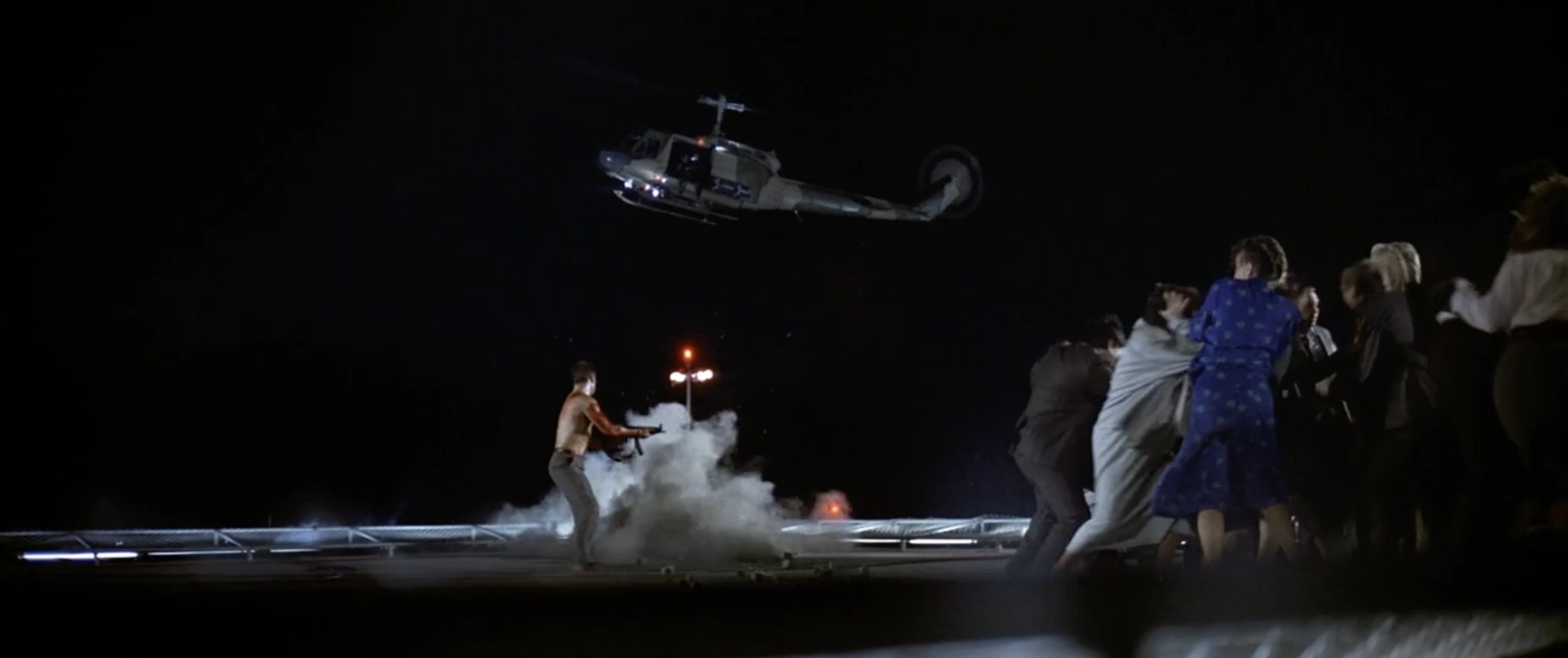
Centered crop · 16:9
A 16:9 television does not have to crop a Scope film. Fitting the full wide image across the screen leaves letterbox bars above and below it. Our comparison deliberately crops the sides to show the difference between preserving and trimming the composition.
What Scope means
An aspect ratio describes image width relative to height. At 2.39:1, the picture is about 2.39 times as wide as it is tall. The term Scope is commonly used for this theatrical widescreen shape; you may also encounter the older 2.35:1 convention and the rounded 2.40:1 notation.
Widescreen processes such as CinemaScope became prominent in the 1950s. Today's ratio describes the delivered frame, not necessarily the camera, lens or recording format used to make it. A spherical-lens image can be cropped to the same shape.
Composition and negative space
Keep several things in view
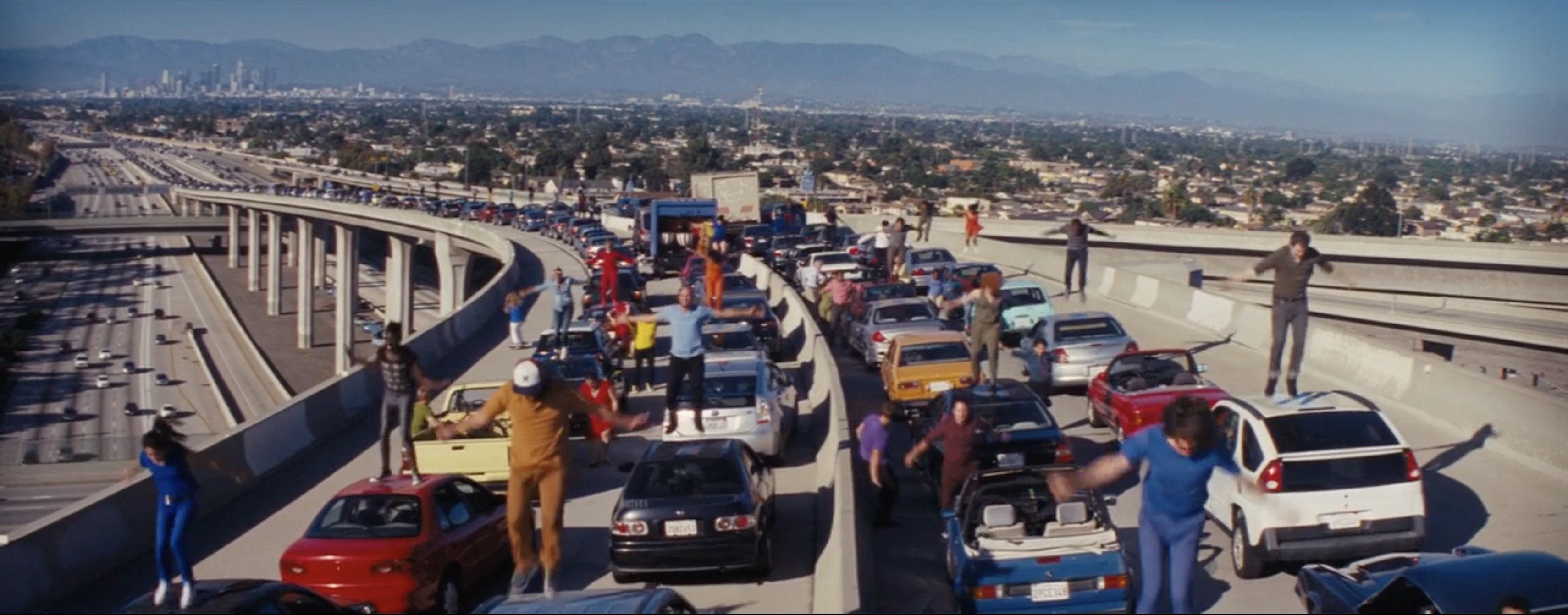
More horizontal space can hold a conversation, movement and the surrounding setting in one shot. A director can place people at opposite edges or let action unfold across the frame. Whether that works depends on the staging; simply adding width does not make a scene clearer.
Let the surroundings matter
Space around a character can suggest distance, isolation or scale. A wide composition gives you room to build those relationships, while also asking viewers to choose where to look.
The lens is a separate choice
An anamorphic lens compresses the image horizontally during capture; it is expanded again for viewing. Some anamorphic designs produce vertically oval out-of-focus highlights and horizontal streak flares. Their strength and appearance vary with the optics, lighting and focus.
Round blur highlights
Oval blur highlights
Those characteristics do not automatically appear when you crop a spherical image to 2.39:1. Conversely, an anamorphic capture need not be delivered at exactly 2.39:1. Frame shape and lens character are related decisions, not interchangeable terms.
Getting a Scope image
- Spherical capture and crop: compose for the intended 2.39:1 frame, then remove the unused top and bottom area as needed. You keep the lens's own character.
- 2× anamorphic capture: the recorded frame shape matters. Expanding a full 4:3 image by 2 gives about 2.67:1, so reaching 2.39:1 requires a further crop. ARRI's approximately 6:5 recording area avoids much of that unused width.
- A smaller squeeze factor: 1.3× applied to a 16:9 image gives about 2.31:1. The final ratio depends on both the capture area and the crop, rather than the lens factor alone.
In every case, decide which part of the captured image will remain in the finished film before composing important details near the edges.
When another ratio works better
A tall space, a face filling the frame or a video intended for vertical viewing may call for a different shape. Neither 16:9 nor 1.85:1 prevents expressive cinematic composition. The useful question is what the scene needs viewers to see.
Choose the frame for the story
Use 2.39:1 when the horizontal relationships help the scene. Keep the full composition when presenting it on a different screen, unless a deliberate crop serves a clear purpose.
Sources
Film references, reviews and technical sources used for this article.
More articles
Is Whalefall Based on a Book? A Spoiler-Free Guide to the Movie
Whalefall adapts Daniel Kraus's 2023 novel. Get the book details, cast and US release date, plus spoiler-free advice on reading it before the movie.
Best Horror Movies of 2026 So Far: A Spoiler-Free Watchlist
Seven horror films worth watching in 2026, from Resident Evil and Obsession to Hokum. Pick by mood, check sequel requirements, and avoid spoilers.
Put your movie knowledge to the test
Choose a quiz and difficulty, or explore today's Daily challenge. Movie quizzes are open to guests. Daily requires an account.